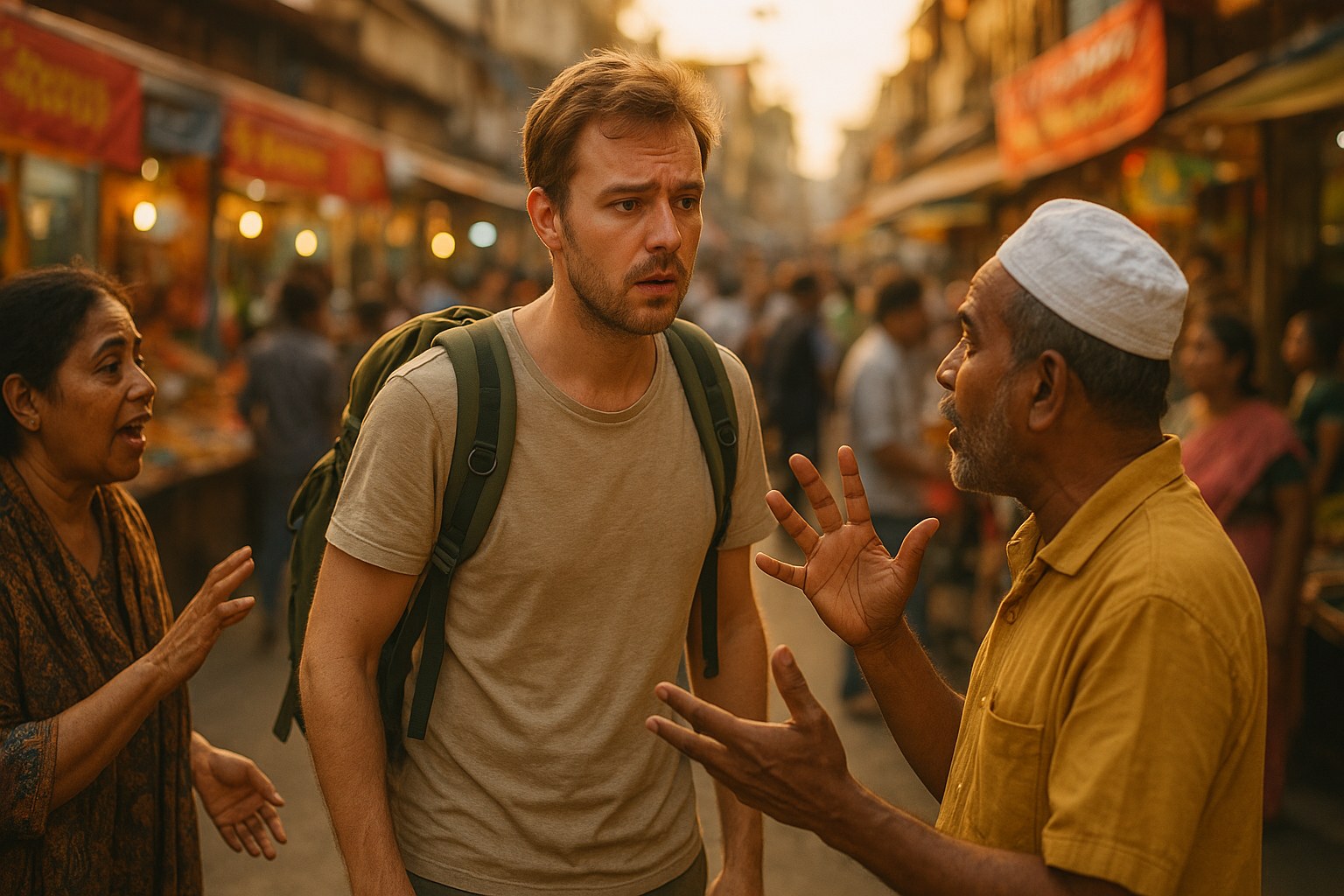
Words, as powerful as they are, often tell only half the story. From the subtle nod of a head in Bulgaria to the specific way one hands over a business card in Japan, non-verbal communication is the silent engine of human interaction. When travelling abroad, understanding these unspoken rules is often the difference between making a lifelong friend and causing an accidental, albeit unintended, offence.
Research conducted by psychologist Albert Mehrabian famously suggested that in face-to-face communication, only 7% of meaning is conveyed through spoken words, while 38% comes from tone of voice and a staggering 55% is attributed to body language and facial expressions. Whilst these figures are debated in academic circles, there is no denying that our gestures, postures, and eye contact speak volumes.
Navigating cultural differences in non-verbal communication abroad is not about memorising an encyclopaedia of gestures for every country. Rather, it is about developing cultural intelligence and observation skills that allow you to adapt, connect, and travel with respect and confidence.
Understanding the Basics: Kinesics, Proxemics, and Haptics
Before diving into specific country examples, it is helpful to understand the three pillars of non-verbal communication that vary most drastically across borders.
Kinesics (Body Language and Gestures)
This refers to movement: hand gestures, posture, and facial expressions. A gesture that signifies “okay” in the United Kingdom or the United States might be a vulgar insult in Brazil or Turkey. Similarly, the “thumbs up” is positive in most Western cultures but historically offensive in parts of the Middle East and West Africa.
Proxemics (Personal Space)
Coined by anthropologist Edward T. Hall, proxemics is the study of measurable distances between people as they interact. Cultures are generally categorised as “contact” or “non-contact.”
- Contact Cultures (e.g., Latin America, Middle East, Southern Europe): People tend to stand closer, touch more frequently, and maintain direct eye contact. Withdrawing or stepping back can be perceived as cold or aloof.
- Non-Contact Cultures (e.g., Northern Europe, East Asia, North America): There is a higher value placed on personal space. Standing too close can feel aggressive or invasive.
Haptics (Touch)
How, when, and who you touch is strictly governed by cultural norms. In some cultures, a pat on the back is a sign of camaraderie; in others, particularly in Thailand where the head is considered the most sacred part of the body, touching someone’s head is a serious transgression.
Common Gestures That Travel Poorly
It is a common traveller’s tale: using a hand signal that means “peace” or “great” at home, only to be met with shocked faces abroad. Here are a few specific gestures to be mindful of when navigating cultural differences.
The “OK” Sign
In the UK and US, making a circle with the thumb and index finger signifies that everything is fine. However, in Brazil, Germany, Russia, and several Mediterranean countries, this gesture is akin to a profanity. In France, it can mean “zero” or “worthless.”
Pointed Fingers and Feet
In many cultures, pointing directly at a person is considered rude. In Malaysia and other parts of Southeast Asia, it is polite to point with the thumb rather than the index finger. Conversely, the soles of the feet are considered the lowest and dirtiest part of the body in Buddhist and Hindu cultures. In Thailand or India, never point your feet at a person or a religious statue, and avoid propping your feet up on tables or chairs.

The Head Wobble
In India, the “head wobble” is a ubiquitous gesture that can confuse first-time visitors. It is not a “yes” (nod) or a “no” (shake), but rather a gesture of acknowledgement, understanding, or “okay.” Recognising this subtle nuance can save travellers from significant frustration when asking for directions or confirming plans.
Eye Contact: Connection or Confrontation?
Eye contact is perhaps one of the most anxiety-inducing aspects of cross-cultural communication for travellers. The rules vary wildly.
In Western cultures, particularly the UK, US, and Canada, direct eye contact is generally associated with honesty, confidence, and attentiveness. Avoiding eye contact might be interpreted as shifty or disinterested.
However, in many East Asian, African, and Latin American cultures, prolonged direct eye contact can be viewed as aggressive, confrontational, or disrespectful, particularly if there is a difference in age or social status.
- Japan: It is polite to look at a person’s neck or chest area rather than directly into their eyes during conversation.
- Nigeria: Prolonged eye contact with an elder is often considered a sign of disrespect.
- Middle East: Eye contact between men is often sustained longer than Westerners are used to, signifying sincerity, whereas eye contact between men and women may be avoided out of respect or modesty.
Actionable Tip: When in doubt, mirror the behaviour of the person you are speaking with. If they hold your gaze, maintain it. If they look away frequently, soften your gaze.
The Concept of “Face” and Silence
In many Asian cultures, the concept of “saving face” (maintaining dignity and avoiding embarrassment) heavily influences non-verbal behaviour. Smiling, for instance, is used universally to show happiness, but in Japan, Vietnam, or Korea, it can also be used to mask embarrassment, confusion, or even sadness. A smile does not always mean agreement or joy.
Silence is another powerful non-verbal tool. In Western business and social contexts, silence is often viewed as awkward—a vacuum that must be filled immediately with chatter. In Finland and Japan, however, silence is valued. It indicates thoughtfulness, respect, and active listening. Interrupting a pause in conversation can be seen as rude or superficial.
Navigating Greetings: From Handshakes to Bows
The greeting is the first non-verbal exchange you will have with a local, and getting it right sets the tone for the entire interaction.
The Wai in Thailand
The wai involves pressing your palms together in a prayer-like fashion and bowing slightly. The height of the hands and the depth of the bow indicate the level of respect. A monk or elder receives a higher hand position (near the forehead) than a peer. As a traveller, returning a wai is a wonderful sign of respect, though you are not expected to initiate it with children or service staff.
Bowing in Japan
While handshakes are becoming more common in international business settings in Japan, the bow (ojigi) remains the standard. Bows range from a casual nod (15 degrees) to a deep, formal bow (45 degrees). Generally, keeping your back straight and your hands at your sides (for men) or clasped in front (for women) while bowing is the respectful approach.

Physical Greetings in Europe and South America
In France, la bise (cheek kissing) is standard, though the number of kisses varies by region. In Argentina, it is common for men to kiss women on the cheek upon meeting. In contrast, in the UK, a firm handshake is the safest default, with cheek kissing usually reserved for friends and family.
Actionable Strategies for the Cultural Traveller
How can you ensure your non-verbal signals don’t get lost in translation? Here are practical strategies for your next trip.
1. Observe Before You Act
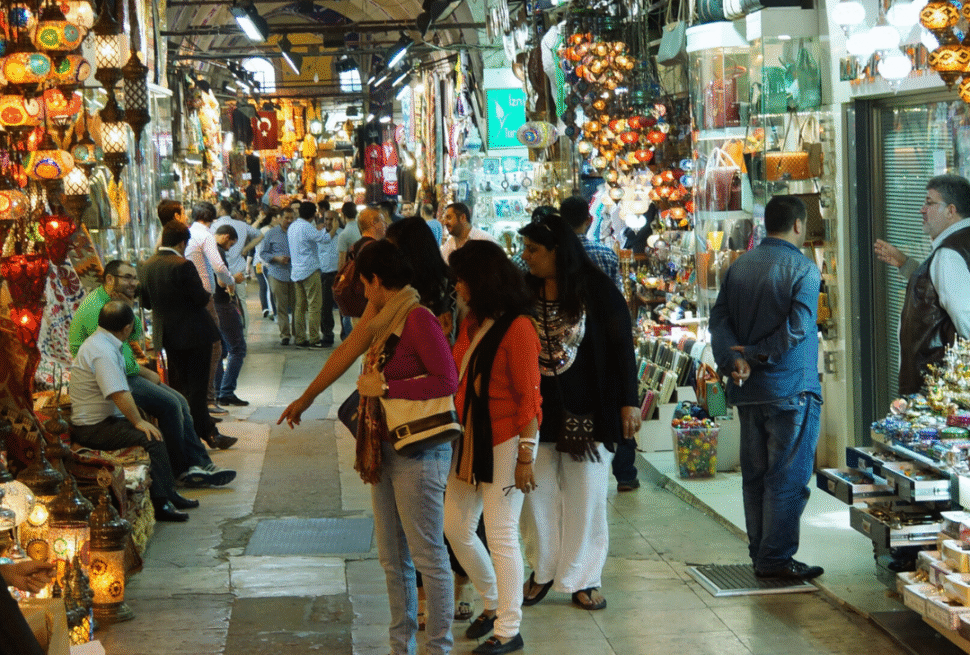
Spend your first day in a new country simply watching people. Go to a busy market, a train station, or a café. Observe how people greet each other, how closely they stand, and how they use their hands. Observation is the best teacher.
2. Master the Art of the “Soft Smile”
A gentle, closed-mouth smile is the safest non-verbal tool in a traveller’s arsenal. It is generally welcoming, non-threatening, and appropriate in almost any culture, even those where grinning widely is uncommon.
3. Keep Your Hands Neutral
If you are unsure of local gestures, adopt a neutral body posture. Avoid putting your hands in your pockets (considered rude in Turkey and South Korea) or crossing your arms (which can appear defensive). Keeping your hands visible and open signals honesty.
4. Apologise Gracefully
If you do commit a faux pas—perhaps you point your feet at a Buddha statue or use your left hand to eat in India—offer a sincere apology. Most people recognise that travellers are guests and are incredibly forgiving if they see you are making an effort to be respectful. These shared moments of cultural learning often lead to deeper connections with fellow travellers and locals alike.
Conclusion: The Journey to Cultural Intelligence
Navigating cultural differences in non-verbal communication abroad is a skill that develops over time. It requires a blend of research, keen observation, and a healthy dose of humility. By understanding that a gesture in one country can mean something entirely different in another, you open yourself up to deeper connections and richer travel experiences.
Remember that perfection is not the goal; respect is. Locals generally do not expect travellers to know every nuance of their culture, but they deeply appreciate the effort to learn. Whether it is mastering the depth of a bow in Tokyo or simply keeping your voice down on a quiet train in Zurich, these non-verbal adjustments show that you are a considerate guest in someone else’s home. So, pack your bags, open your eyes, and let your body language speak the universal language of respect.