Travelling alone internationally can be one of life’s most enriching experiences, yet for many people, the prospect of navigating foreign countries solo triggers genuine anxiety. Whether it’s concerns about safety, loneliness, language barriers, or simply stepping outside your comfort zone, solo travel anxiety is remarkably common and entirely manageable with the right strategies.
Research suggests that around 25% of travellers experience significant anxiety before and during solo trips, with international journeys amplifying these feelings due to unfamiliar environments and cultural differences. The good news is that thousands of solo travellers have successfully managed these concerns, and their experiences offer valuable insights for anyone feeling apprehensive about embarking on their own adventure.
Understanding Solo Travel Anxiety
Solo travel anxiety manifests differently for everyone, but common symptoms include racing thoughts about worst-case scenarios, physical tension, difficulty sleeping before departure, and persistent worry about logistics. Unlike general travel stress, solo travel anxiety often centres on the absence of a companion to share decision-making, provide reassurance, or help navigate unexpected situations.
Many travellers experience what psychologists call “anticipatory anxiety”—intense worry about events that may never occur. This type of anxiety often peaks in the weeks leading up to departure and can continue through the first few days of travel. Understanding that these feelings are normal responses to stepping outside familiar routines can be the first step towards managing them effectively.
Common Triggers for Solo Travel Anxiety
Identifying specific triggers helps develop targeted coping strategies. Research and traveller experiences reveal several recurring sources of anxiety:
- Safety concerns: Worries about crime, scams, or medical emergencies without immediate support
- Loneliness and isolation: Fear of spending extended periods alone in unfamiliar places
- Decision-making pressure: Anxiety about making wrong choices without someone to consult
- Language barriers: Concerns about communication difficulties and cultural misunderstandings
- Navigation challenges: Worry about getting lost or missing transportation connections
- Social anxiety: Discomfort with dining alone, joining group activities, or meeting new people
Pre-Departure Strategies for Managing Anxiety
Preparation significantly reduces travel anxiety by creating structure and familiarity before you even leave home. The key is balancing thorough planning with flexibility, ensuring you feel prepared without becoming overwhelmed by details.
Research and Planning Techniques
Start by researching your destination thoroughly, but focus on practical information that directly addresses your concerns. Read recent traveller reviews, understand local customs, and familiarise yourself with common scams or safety issues. Create a loose itinerary for your first few days, including accommodation details, transportation from the airport, and a few planned activities.
However, avoid over-planning every moment. Excessive detail can create additional pressure and disappointment when plans inevitably change. Instead, prepare frameworks rather than rigid schedules—know your options for different scenarios without committing to inflexible timelines.
Building Confidence Through Preparation
Practical preparation builds genuine confidence. Learn basic phrases in the local language, including emergency expressions like “help,” “hospital,” and “I don’t understand.” Download offline maps, translation apps, and important contact numbers. Make copies of essential documents and store them separately from originals.
Consider practising solo activities at home—dining alone, visiting museums independently, or taking day trips by yourself. These experiences build familiarity with solitude and self-reliance in comfortable settings before tackling them abroad. Understanding cultural etiquette when dining can also ease anxiety about eating alone in foreign countries.
Practical Anxiety Management Tools
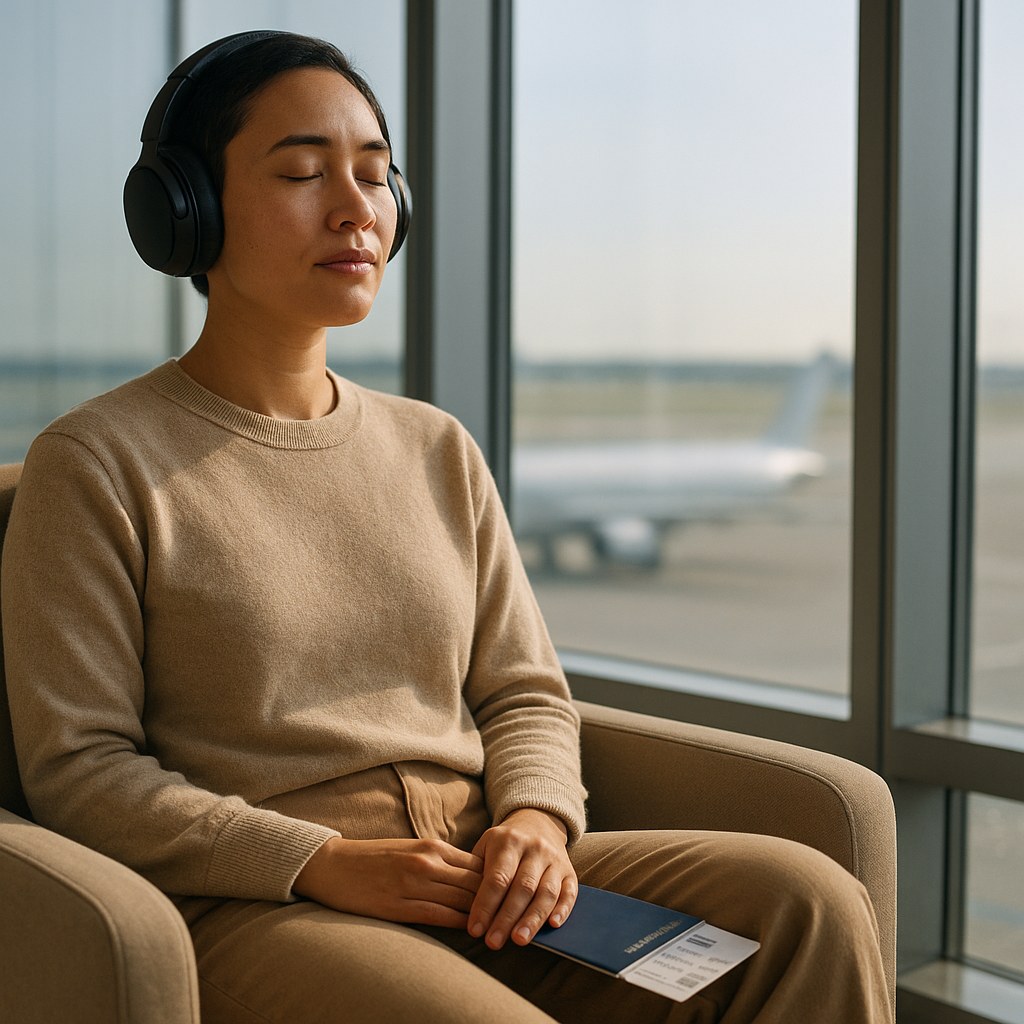
Develop a toolkit of anxiety management techniques you can use anywhere. Deep breathing exercises, progressive muscle relaxation, and mindfulness practices are particularly effective for travel anxiety because they require no special equipment or preparation.
Consider downloading meditation apps with offline content, creating calming playlists, or preparing positive affirmations specific to travel concerns. Some travellers find comfort in carrying small familiar objects or photos that provide emotional grounding during stressful moments.
During Your Journey: Real-Time Anxiety Management
Even with thorough preparation, anxiety can arise during travel. Having strategies for managing these moments prevents them from derailing your entire experience.

The First 48 Hours Strategy
The initial days of solo travel often present the highest anxiety levels as you adjust to new surroundings. Plan these first 48 hours more carefully than the rest of your trip. Book accommodation in well-reviewed areas, arrange airport transfers in advance, and choose a few low-pressure activities to build confidence.
Allow yourself time to acclimatise. Many experienced solo travellers recommend staying in one location for the first few days rather than immediately moving between destinations. This approach provides a stable base whilst you develop confidence navigating your new environment.
Managing Overwhelming Moments
When anxiety peaks during travel, having immediate coping strategies prevents temporary discomfort from becoming trip-ruining distress. The “5-4-3-2-1” grounding technique works particularly well: identify five things you can see, four you can touch, three you can hear, two you can smell, and one you can taste. This technique redirects attention from anxious thoughts to immediate surroundings.
Remember that feeling anxious doesn’t mean you’re unsafe or making poor decisions. Anxiety is often excitement wearing a different costume—the same physiological arousal can indicate anticipation rather than danger. Learning to reframe anxiety as natural nervousness about new experiences helps maintain perspective.
Building Social Connections
Loneliness can amplify anxiety significantly. Fortunately, solo travel often provides more opportunities for meaningful social connections than travelling with companions. Stay in social accommodation like hostels or guesthouses with common areas, join walking tours or group activities, and consider apps designed to connect travellers with locals or fellow adventurers.
However, balance social activities with alone time. Forcing constant social interaction can increase anxiety rather than relieve it. Choose quality connections over quantity—one genuine conversation often provides more comfort than superficial interactions with large groups.
Addressing Specific Anxiety Concerns
What If Something Goes Wrong?
Catastrophic thinking fuels much travel anxiety. Combat this by developing realistic contingency plans for common concerns. Research nearby hospitals and embassy contacts, understand your travel insurance coverage, and identify 24-hour pharmacies or medical facilities near your accommodation.
Remember that most problems have solutions, and locals are generally helpful to travellers in genuine distress. Keep emergency contact numbers easily accessible, including family members, your country’s embassy, and your insurance provider’s international assistance line.
How Do I Handle Language Barriers?
Language anxiety often proves more intimidating in anticipation than reality. Most people worldwide are patient with travellers attempting to communicate, and non-verbal communication bridges many gaps. Download translation apps that work offline, learn key phrases, and carry a phrasebook as backup.
Remember that many countries have some English speakers, particularly in tourist areas, hotels, and restaurants. Even basic attempts at local language are usually appreciated and often met with helpful responses.
Is It Safe to Travel Alone as a Woman?
Women face unique considerations for solo travel, but millions travel safely alone annually. Research destination-specific advice, understand local cultural norms regarding dress and behaviour, and trust your instincts about people and situations.
Connect with other female travellers through online communities and apps designed for women travelling alone. Many cities offer women-only accommodation options, tours, and activities that provide additional security and social opportunities.
Long-Term Strategies for Confident Solo Travel
Building lasting confidence for solo travel involves developing both practical skills and emotional resilience. Each successful solo journey makes the next one easier, creating positive momentum that gradually replaces anxiety with anticipation.
Starting Small and Building Up
If international solo travel feels overwhelming, start with shorter domestic trips or nearby countries with familiar cultures. Success with smaller challenges builds confidence for larger adventures. Many experienced solo travellers began with weekend city breaks before progressing to extended international journeys.
Consider destinations known for being particularly welcoming to solo travellers, with good tourism infrastructure and English-speaking populations. Popular starting points include countries in Western Europe, Australia, New Zealand, and parts of Southeast Asia.
Learning from Experience
Keep a travel journal documenting both challenges and successes. Recording how you handled difficult situations provides evidence of your capabilities for future trips. Many travellers discover that situations they worried about most either never occurred or were more manageable than anticipated.
Connect with other solo travellers online and in person to share experiences and strategies. Communities like solo travel forums provide ongoing support and practical advice from people who understand your concerns firsthand.
When to Seek Additional Support
Whilst some travel anxiety is normal, persistent or severe anxiety that significantly impacts your ability to enjoy or complete trips may benefit from professional support. Consider speaking with a counsellor or therapist if anxiety prevents you from travelling altogether or causes significant distress during journeys.
Many people find that addressing underlying anxiety through therapy or counselling improves not only their travel experiences but their overall quality of life. Travel anxiety often reflects broader patterns that respond well to professional treatment.
Conclusion
Managing travel anxiety during solo international journeys requires preparation, practical strategies, and self-compassion. Remember that anxiety is a normal response to new experiences and doesn’t indicate weakness or inability to travel successfully. Thousands of anxious travellers have discovered that their concerns were more manageable than anticipated and that solo travel offers unique rewards unavailable through other forms of exploration.
The key strategies for success include thorough but flexible preparation, developing practical anxiety management techniques, starting with manageable challenges, and building confidence through experience. Most importantly, remember that feeling anxious doesn’t prevent you from having transformative travel experiences—it simply means you’re human, stepping outside your comfort zone to embrace the growth and discovery that solo international travel uniquely provides.
Your anxiety may never disappear completely, but with the right tools and mindset, it doesn’t have to prevent you from exploring the world on your own terms. Each journey builds resilience and confidence, gradually transforming anxiety from a barrier into simply another aspect of the adventure to be managed and ultimately embraced.